Thailand-Cambodia Border Disruption: Sourcing Strategies for Importers

The Thailand-Cambodia border disruption has fundamentally changed how manufacturers and importers move goods across Southeast Asia. Companies sourcing from Cambodia must now rethink logistics, inventory planning, supplier management, and transportation routes to reduce disruption risks and maintain resilient supply chains.
For many years, cross-border trade between Thailand and Cambodia relied heavily on predictable land transportation. The prolonged border disruption changed that assumption almost overnight. Manufacturers, logistics providers, and global buyers have been forced to identify alternative corridors, redesign sourcing strategies, and strengthen supply chain resilience.
Rather than treating this disruption as a temporary crisis, importers should recognize that it represents a structural shift in regional logistics.

Why has the Thailand-Cambodia border disruption become a sourcing challenge?
The border disruption has affected much more than truck movements between two neighboring countries.
For many manufacturers in Cambodia, Thailand previously served as an important logistics gateway connecting factories with regional distribution centers, international ports, suppliers, and transport networks. When this route became unreliable, businesses experienced immediate consequences, including longer lead times, increased transportation costs, shipment delays, and greater uncertainty in production planning.
More importantly, the disruption exposed a broader lesson for international buyers.
Supply chains that depend heavily on a single transportation corridor become vulnerable when geopolitical events interrupt normal trade flows.
For importers, this means resilience has become just as important as cost efficiency.
How are manufacturers adapting their export routes?
One of the most significant developments highlighted in the source document is the rapid shift away from traditional Thai logistics corridors.
Instead of relying primarily on western land routes, manufacturers are increasingly moving exports eastward through Vietnam or directly via Cambodia’s maritime infrastructure.
This transition is supported by substantial investment in regional logistics infrastructure.
According to the report, major transport projects connecting Cambodia with Vietnam are transforming the Moc Bai corridor into a new logistics gateway. New expressway developments, together with a 10-hectare logistics hub at Moc Bai, are expected to strengthen connections between Cambodian factories and Vietnam’s deep-water ports.
Businesses sourcing from Cambodia should therefore begin evaluating Cambodia-Vietnam cross-border logistics as a long-term transportation strategy rather than simply an emergency alternative.
This represents a structural evolution in regional supply chains rather than a temporary workaround.
What role is Sihanoukville Port playing?
The report also identifies Cambodia’s maritime sector as one of the biggest beneficiaries of the border disruption.
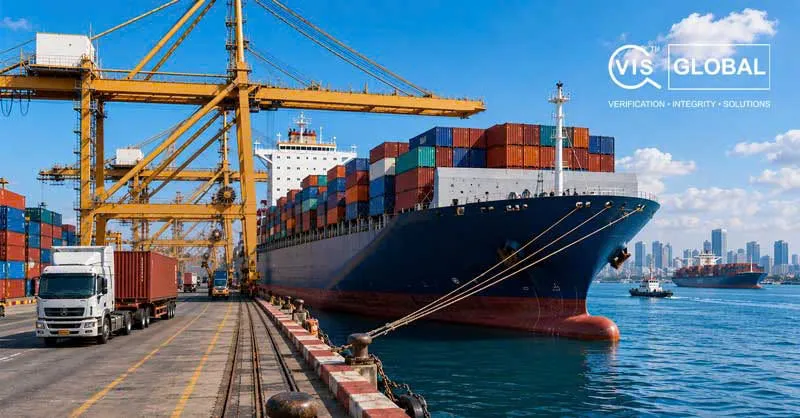
Unable to rely on traditional overland routes, many exporters shifted cargo directly through the Sihanoukville Autonomous Port (PAS).
The operational impact has been substantial.
According to the PAS report:
| Indicator | Development |
|---|---|
| Container throughput | Increased 21% in 2024 and 25% in 2025 |
| Third-quarter 2025 net profit | Increased by 946.93% year over year |
| First-quarter 2026 revenue | Increased nearly 52% year over year |
| Phase I expansion | Capacity increasing to 1.15 million TEUs with Over-Panamax capability |
These figures indicate more than short-term growth.
They demonstrate that Cambodia is strengthening its own maritime export capability, reducing dependence on neighboring logistics hubs and creating additional routing options for international buyers.
For importers, this diversification improves long-term supply chain flexibility.
Why should importers diversify logistics corridors now?
One of the strongest conclusions in the report is that relying on a single export route is no longer an acceptable sourcing strategy.
The document recommends that companies proactively evaluate multiple transportation options before disruptions occur rather than waiting until traditional routes become unavailable.
Examples include:
- Exporting through Vietnam via Moc Bai
- Using Phnom Penh Autonomous Port for river transport
- Shipping directly through Sihanoukville Port
- Testing alternative inland corridors before emergencies occur
Rather than asking whether an alternative route exists, importers should understand how quickly that route can be activated when disruptions arise.
Small-scale pilot shipments conducted during stable periods provide valuable information about customs procedures, transit times, road conditions, and logistics partner performance before a crisis develops.
How can digital customs systems reduce disruption?
Physical infrastructure is only one part of resilient logistics.
The report identifies the ASEAN Customs Transit System (ACTS) as another important tool helping businesses move goods more efficiently across participating ASEAN countries.
ACTS allows authorized traders to transport goods using:
- A single truck
- One electronic customs declaration
- One financial guarantee
- End-to-end customs visibility across participating member states
Instead of unloading cargo and completing separate customs procedures at every border crossing, authorized shipments can move through participating countries under a unified transit framework.
The report notes that logistics operators using ACTS have reported operational cost reductions of 30% to 40% compared with conventional cross-border transit methods.
For companies managing regional sourcing across Southeast Asia, digital customs integration is becoming an increasingly valuable component of supply chain resilience.
Why should importers rethink inventory planning?
The border disruption has also challenged one of the most common supply chain practices: maintaining minimal inventory.
When transportation routes become unpredictable, traditional just-in-time inventory strategies become increasingly vulnerable.
The report explains that organizations should reconsider safety stock calculations to account for sudden geopolitical disruptions.
It highlights supply chain sensitivity analysis showing that a combined 30% increase in demand volatility and logistics lead times requires significantly higher safety stock levels to maintain service performance.
Although higher inventory increases carrying costs, the report argues that these costs are often significantly lower than the financial impact of production shutdowns or missed customer deliveries.
Instead of viewing inventory as excess cost, resilient organizations increasingly treat safety stock as a strategic risk management investment.
Which supply chain signals should buyers monitor?
Another important recommendation from the report is that companies should monitor geopolitical developments continuously rather than reacting after border closures occur.
The report identifies six important data streams that provide early warning of escalating risks.
These include:
| Early Warning Indicator | Why It Matters |
|---|---|
| Diplomatic negotiations | Indicates progress or deterioration in bilateral relations |
| Border incidents | Often trigger immediate checkpoint restrictions |
| Official government statements | Reveal changes in political positioning |
| Social media sentiment | May indicate rising nationalist tensions |
| Military coordination meetings | Reflect operational stability along border areas |
| Carrier advisories | Provide practical logistics warnings before disruptions occur |
Rather than relying solely on annual country risk assessments, procurement teams should incorporate these indicators into ongoing supply chain monitoring to improve response times when conditions change.
How should importers strengthen supplier relationships during disruptions?
The report emphasizes that logistics resilience is not achieved through transportation planning alone. Strong supplier relationships play an equally important role in maintaining production continuity during periods of uncertainty.
When border conditions change rapidly, suppliers often receive new information before overseas buyers. Maintaining regular communication enables both parties to respond more quickly to changing transportation conditions, production schedules, and material availability.
Importers should establish regular communication with suppliers to discuss:
- Production progress
- Raw material availability
- Logistics constraints
- Export scheduling
- Inventory status
- Contingency plans
Instead of waiting until shipment delays occur, buyers who communicate proactively are better positioned to adjust purchasing schedules and minimize disruptions.
The report also encourages companies to develop collaborative contingency plans with strategic suppliers rather than relying solely on contractual obligations. This approach improves responsiveness when unexpected events affect normal business operations.
Why should sourcing contracts become more flexible?
Another important lesson from the border disruption is that sourcing agreements should reflect today’s increasingly unpredictable operating environment.
Traditional purchasing contracts often assume stable transportation networks and predictable lead times. However, geopolitical events can quickly invalidate those assumptions.
The report recommends that businesses review contractual arrangements to improve flexibility during unexpected disruptions.
Areas for consideration include:
- Delivery schedules
- Transportation responsibilities
- Force majeure provisions
- Alternative shipping arrangements
- Inventory ownership
- Communication protocols during emergencies
While contracts cannot prevent disruptions, clearly defined contingency procedures help buyers and suppliers respond more efficiently when circumstances change.
How can technology improve supply chain visibility?
The report identifies digital visibility as one of the most effective tools for managing supply chain uncertainty.
Rather than relying solely on periodic status updates, companies are increasingly using digital platforms to monitor shipments, transportation routes, inventory levels, and logistics performance in real time.
Improved visibility allows sourcing teams to:
- Identify shipment delays earlier.
- Monitor transportation bottlenecks.
- Track inventory movements.
- Evaluate supplier performance.
- Support faster decision making.
For organizations managing multiple suppliers across Southeast Asia, real-time information reduces uncertainty and enables more proactive responses to changing conditions.
The report also notes that digital monitoring should extend beyond transportation to include supplier performance indicators and operational risks throughout the sourcing process.
What practical actions should importers take now?
Rather than waiting for border conditions to stabilize, the report recommends taking immediate steps to improve supply chain resilience.
The following actions can help reduce sourcing risks:
| Recommended Action | Expected Benefit |
|---|---|
| Diversify transportation routes | Reduces dependence on a single logistics corridor |
| Evaluate alternative ports | Improves shipping flexibility |
| Increase supply chain visibility | Enables faster response to disruptions |
| Review inventory policies | Reduces stockout risks |
| Strengthen supplier communication | Improves production planning |
| Develop contingency logistics plans | Supports business continuity |
| Monitor geopolitical developments | Provides earlier warning of potential disruptions |
These actions should not be viewed as temporary responses to a single event. Instead, they represent long-term supply chain management practices that improve resilience against future disruptions.
What role does quality control play during supply chain disruptions?
Although the report focuses primarily on logistics and sourcing strategies, it also reinforces the importance of maintaining quality standards during periods of operational pressure.
When transportation routes become constrained, manufacturers may experience compressed production schedules, changes in material availability, or adjustments to shipping plans. These conditions can increase quality risks if production controls are weakened.
Importers should continue implementing independent quality inspections throughout production rather such as pre-production inspection, DuPro Inspection, pre-shipment inspection, etc…than reducing oversight to accelerate shipments.
Maintaining consistent quality verification helps ensure that efforts to overcome logistics challenges do not create additional risks related to product quality, compliance, or customer satisfaction.
For buyers sourcing from Cambodia, resilient supply chains require balancing speed, flexibility, and quality throughout the production and export process.
What does the border disruption mean for Cambodia’s long-term competitiveness?
One of the report’s most important conclusions is that the current disruption is accelerating structural changes that were already underway.
Cambodia is expanding its transportation infrastructure, strengthening maritime capabilities, improving regional connectivity, and adopting digital customs systems that support more diversified trade.
These developments reduce dependence on individual border crossings while creating additional export options for manufacturers and international buyers, which is one of the reasons why global brands are expanding sourcing operations in Cambodia.
Rather than weakening Cambodia’s manufacturing sector, the report suggests that these investments may ultimately increase its competitiveness by making supply chains more flexible and resilient over the long term.
For importers, this means sourcing strategies should evolve alongside these infrastructure developments.
Conclusion
The Thailand-Cambodia border disruption has demonstrated that supply chain resilience is no longer optional.
Businesses that depend on a single transportation corridor face greater exposure to geopolitical events, logistics disruptions, and changing regional trade conditions. The organizations that adapt most successfully are those that diversify transportation routes, strengthen supplier collaboration, improve supply chain visibility, and continuously monitor emerging risks.
Cambodia’s investments in port infrastructure, regional logistics connectivity, and digital customs integration are reshaping how goods move across Southeast Asia. These developments create new opportunities for importers willing to adopt more flexible sourcing strategies.
As global supply chains continue to evolve, resilient sourcing will depend not only on selecting capable suppliers but also on building logistics networks that can adapt quickly to changing circumstances.
Contact VIS Global for third-party inspection in Cambodia.