Common Quality Defects Found in Cambodia Garment Manufacturing

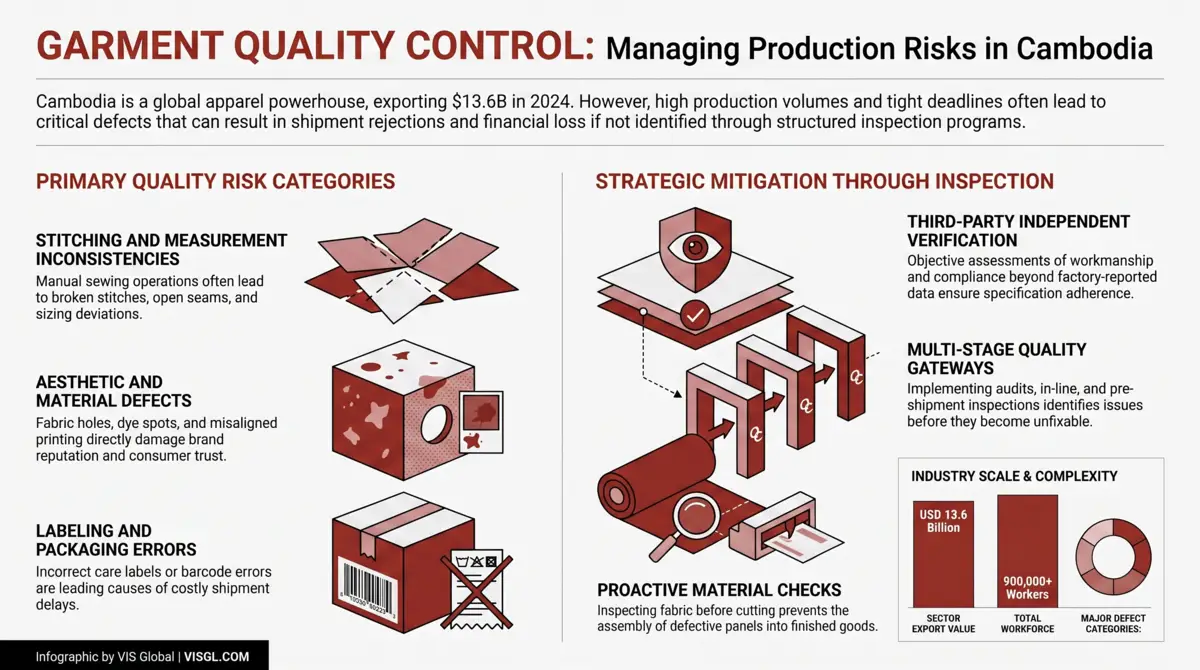
Common quality defects found in Cambodia garment manufacturing include stitching defects, measurement inconsistencies, fabric flaws, printing errors, labeling mistakes, and color variations. While Cambodia is a major sourcing destination for international apparel brands, quality risks can still arise during production. Independent inspections help buyers identify defects early and prevent costly shipment disputes.
Cambodia has established itself as one of the world’s most important apparel manufacturing hubs. The country’s garment, footwear, and travel goods sector generated approximately USD 13.6 billion in exports in 2024 and employs more than 900,000 workers. International brands source a wide range of products from Cambodia, including T-shirts, sportswear, uniforms, outerwear, knitwear, and fashion apparel.
Despite the industry’s maturity, garment quality remains a key concern for importers and retailers. Production volumes are large, delivery schedules are often tight, and even minor process deviations can result in thousands of defective pieces.
For buyers sourcing from Cambodia, understanding the most common garment defects is an important first step toward reducing supply chain risk.
What Are the Most Common Defects Found During Garment Inspections in Cambodia?
The most frequently identified garment defects in Cambodia generally fall into six categories:
- Stitching and sewing defects
- Measurement and sizing defects
- Fabric defects
- Printing and embroidery defects
- Color and shade inconsistencies
- Labeling and packaging defects
These issues are routinely identified during in-line inspections, during production inspections, and pre-shipment inspections conducted by quality control professionals.
While the severity varies from one factory to another, these defects represent the majority of non-conformities found during garment inspections.
Why Do Garment Quality Problems Occur in Cambodia Manufacturing?
Most quality defects are not caused by a single mistake.
Instead, they typically result from weaknesses in production control systems.
Common contributing factors include:
- High production volumes
- Frequent style changes
- New worker onboarding
- Tight shipment deadlines
- Fabric quality variation
- Inadequate process monitoring
Cambodia’s garment sector is highly competitive, and factories often manage multiple production orders simultaneously. Without effective quality checkpoints, small issues can spread quickly across an entire production run.
This is why many international buyers implement inspection programs throughout production rather than relying solely on final inspections.
What Stitching Defects Are Most Frequently Found?
Stitching defects are among the most common quality issues identified in Cambodian garment factories.
Because sewing operations involve significant manual work, consistency can vary between operators, production lines, and shifts.
Common stitching defects include:
| Stitching Defect | Potential Impact |
|---|---|
| Broken stitches | Reduced seam durability |
| Skipped stitches | Weak seam construction |
| Open seams | Product failure during use |
| Loose threads | Poor appearance |
| Uneven stitching | Inconsistent workmanship |
| Seam puckering | Distorted garment shape |
For products such as sportswear, workwear, children’s apparel, and uniforms, seam integrity is particularly important because garments are subjected to repeated movement and washing.
Inspectors typically evaluate stitch density, seam strength, thread quality, and workmanship consistency throughout production.
What Fabric Defects Cause Shipment Rejections?
Fabric defects can be especially costly because they often cannot be corrected once garments have been cut and sewn.
Many garment quality problems originate before production even begins.
Common fabric defects include:
- Holes and tears
- Yarn contamination
- Knots and slubs
- Dye spots
- Oil stains
- Weaving defects
- Uneven texture
- Fabric distortion
A fabric flaw that appears minor on a single panel can become highly visible once the garment is assembled.
For fashion brands and retailers, visible fabric defects often lead to customer complaints, returns, and damage to brand reputation.
Many buyers therefore conduct fabric inspections before bulk production starts.
How Do Measurement Defects Impact Apparel Buyers?
Measurement defects are one of the leading causes of shipment disputes in global apparel sourcing.
Retailers rely on size consistency because consumers expect garments labeled with the same size to fit similarly.
Common measurement issues include:
- Incorrect chest width
- Uneven garment length
- Sleeve length deviations
- Incorrect waist measurements
- Collar size variations
- Inseam inconsistencies
The financial impact can be significant.
Unlike cosmetic defects, sizing problems often affect the functionality of the garment itself. Products that do not meet approved measurement tolerances may be rejected entirely by the buyer.
This is why inspectors routinely compare production samples against approved size specifications throughout manufacturing.
What Printing and Embroidery Defects Are Found During Inspection?
Cambodia manufactures a large volume of branded apparel, promotional garments, sportswear, and fashion products that contain printed graphics or embroidered logos.
These decorative elements require additional quality controls.
Common printing defects include:
- Misaligned artwork
- Ink smearing
- Incomplete prints
- Color mismatch
- Cracking prints
- Registration errors
Common embroidery defects include:
- Loose threads
- Missing stitches
- Distorted logos
- Incorrect positioning
- Thread color variation
Because logos and branding are highly visible to consumers, these defects often receive immediate attention from buyers during inspections.
Even when the garment itself meets specifications, branding defects can result in rejection.
Why Are Color Variations a Frequent Concern?
Color consistency remains a major challenge throughout the apparel industry, including Cambodia.
A single style may be produced using multiple fabric lots, dye batches, or production runs.
This can result in:
- Shade variation within the same order
- Color differences between production lots
- Inconsistent matching between garment components
For fashion brands, color inconsistency creates both quality and merchandising challenges.
Consumers expect products displayed online, in catalogs, and in stores to accurately match the intended color.
Inspection teams often perform visual assessments under controlled lighting conditions and compare production samples against approved standards.
What Labeling and Packaging Defects Are Commonly Found?
Many buyers focus heavily on garment construction but overlook packaging compliance.
In reality, packaging and labeling errors are among the most common causes of shipment delays.
Typical issues include:
- Incorrect size labels
- Wrong country-of-origin information
- Missing care labels
- Barcode errors
- Incorrect carton markings
- Packaging specification deviations
These defects can affect customs clearance, warehouse operations, retail distribution, and regulatory compliance.
As a result, packaging verification is a standard component of professional pre-shipment inspections.
How Can Buyers Reduce Garment Quality Risks in Cambodia?
The most effective approach combines supplier management with independent quality control.
Buyers can significantly reduce quality risks by implementing:
- Factory audits before production begins.
- Material inspections before cutting.
- During production inspections.
- Measurement checks throughout manufacturing.
- Pre-shipment inspections before export.
- Corrective action monitoring.
This approach allows quality issues to be identified while there is still time to implement corrective actions.
Waiting until goods arrive at the destination market is usually far more expensive.
What Role Does Third-Party Inspection Play in Cambodia Garment Manufacturing?
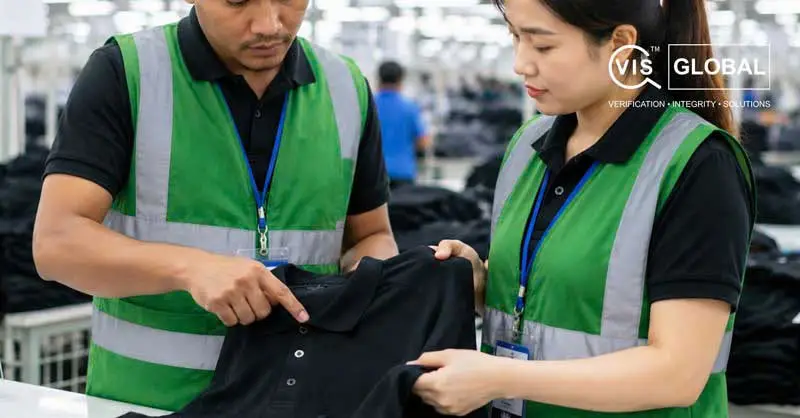
Third-party inspection provides independent verification that products meet buyer specifications before shipment.
A professional inspection program can evaluate:
- Workmanship quality
- Fabric condition
- Measurements and sizing
- Printing and embroidery
- Labeling compliance
- Packaging requirements
- Overall production consistency
For importers sourcing from Cambodia, inspections serve as an additional layer of risk management.
Rather than relying solely on factory-reported quality data, buyers receive objective information about actual production conditions and finished goods quality.
Conclusion
Cambodia remains one of the world’s leading garment sourcing destinations, supplying apparel to major international brands across North America, Europe, Asia, and other global markets.
However, stitching defects, fabric flaws, measurement inconsistencies, printing errors, color variations, and labeling mistakes continue to represent common quality risks during production.
By understanding these defects and implementing structured inspection programs throughout manufacturing, buyers can improve product quality, reduce shipment disputes, and strengthen long-term supplier performance.
For companies sourcing garments from Cambodia, proactive quality control is not simply a compliance requirement. It is an essential investment in customer satisfaction, brand protection, and supply chain reliability.